
You don’t need to buy a drone to prepare for FAA Part 107 certification. If you’re figuring out how to get drone certified on a budget, start by separating official testing and application expenses from optional courses, equipment, and practice tools.
Free study materials may be enough for some learners, while others benefit from a course, instructor support, or hands-on practice. The right choice depends on how you learn, how much structure you want, and what you plan to do after certification. Training can help you prepare, but the FAA certification process is separate.
This guide compares self-study, online training, and practical learning to help you choose a path that fits your schedule and goals. You’ll also learn how to avoid unnecessary equipment purchases and build a focused study plan. If you prefer guided preparation, AINautics University offers Part 107 Training and Self-Paced Certification. Its Drone Simulator provides a way to practise without owning a drone.
Key Takeaways
- Separate official FAA testing and application expenses from optional courses, equipment, and practice tools before setting your budget.
- To learn how to get drone certified on a budget, start with current FAA materials, identify knowledge gaps, and add support where it will help.
- Compare self-study, self-paced instruction, and instructor support by structure, flexibility, feedback, and the time you can commit.
- Build a staged spending plan and confirm current test fees and exam procedures before committing funds.
- Use Part 107 Training or Self-Paced Certification to prepare, while remembering that completing a course is separate from earning FAA certification.
What does drone certification involve, and what must you budget for?
FAA Part 107 certification is the process of meeting FAA requirements to earn a Remote Pilot Certificate for qualifying small uncrewed aircraft operations under Part 107. The FAA issues the certificate, not a training provider. A course can help you prepare, but completing one does not make you a certified remote pilot.
That distinction matters when you set a budget. Treat certification as an official FAA process with separate preparation choices, not as a single course purchase. You can explore the broader meaning and uses of an Unmanned aerial vehicle, but use FAA guidance for the requirements to operate under Part 107.
What does an FAA Remote Pilot Certificate certify?
The certificate qualifies its holder to conduct certain small UAS operations under Part 107, provided each operation follows applicable FAA rules. It is different from recreational flying, which follows a separate set of requirements. The certificate is a foundation for compliant operations, not blanket permission for every flight, location, or purpose.
Before planning a test date, review the FAA’s current guidance on eligibility, knowledge testing, application steps, and certificate issuance. Requirements and procedures can change, so confirm details through FAA sources and the FAA-linked test-registration process rather than relying on an old study guide or undated cost estimate. Certification is one step in responsible drone operations; pilots also need to understand the rules that apply to each flight.
Which costs are required, and which are optional?
Separate expenses into two groups before paying for anything. This makes it easier to distinguish official process requirements from choices you can make based on your learning needs.
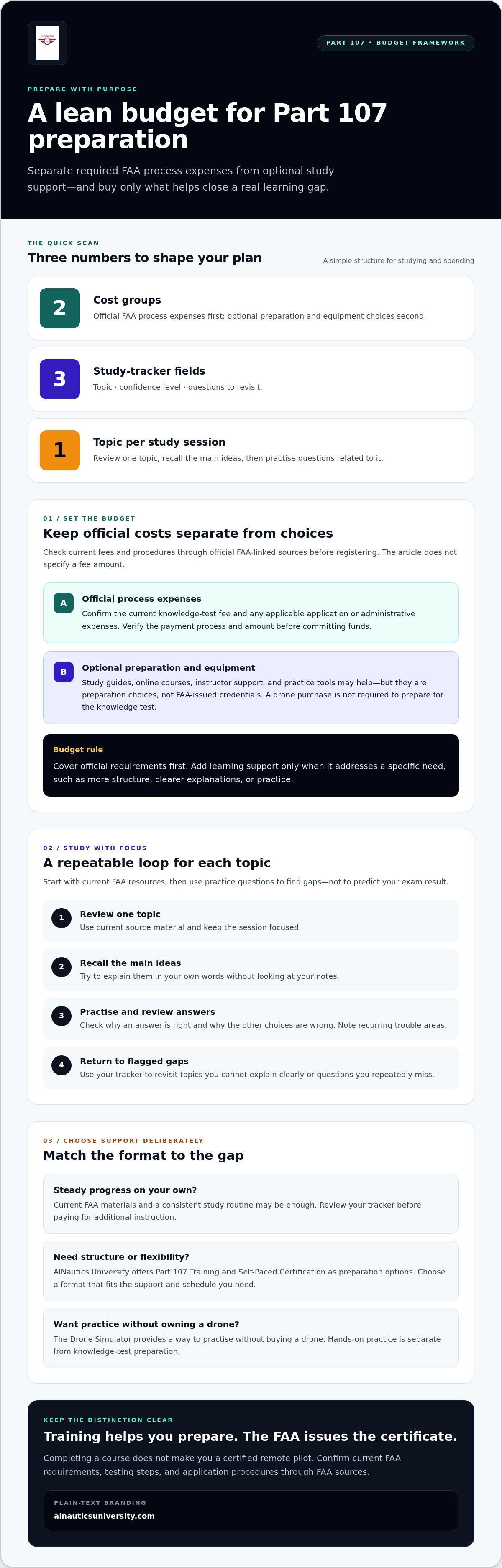
- Official process expenses: Check the current knowledge-test fee and any applicable application or administrative expenses through official FAA-linked sources. Confirm the payment process and amount before registering.
- Optional preparation: Study guides, online courses, instructor support, and practice tools may help you learn, but they are preparation choices, not FAA-issued credentials. Compare them with your learning needs before committing.
- Equipment: Don’t assume you need to buy a drone to study or take the knowledge test. Start by checking the exam requirements and choosing resources that match your goals. Hands-on practice can be valuable, but it is separate from test preparation.
A budget-conscious plan doesn’t mean automatically choosing the cheapest option. Pay for official requirements first, then add learning support only when it addresses a real need, such as more structure or practice. If you’re deciding how to get drone certified on a budget, begin with current FAA materials and procedures. Then identify whether a course, feedback, or simulation-based practice would fill a specific gap.
How can you prepare for Part 107 certification on a limited budget?
A cost-conscious study plan starts with current FAA resources, not a stack of paid courses. Review the guidance, test materials, and registration information linked through the FAA’s commercial drone operators page. Check that each resource is current for your exam. Outdated explanations can leave gaps or create confusion.
Start with official materials and a focused study plan
Set a repeatable study rhythm. In each session, review one topic, recall the main ideas without looking at your notes, and answer relevant practice questions. Keep a simple tracker with three columns: topic, confidence level, and questions to revisit. Flag a topic when you can’t explain it in your own words or repeatedly miss related questions.
Use practice questions to diagnose gaps, not to predict your result. After each set, review why an answer is right and why the other choices are wrong. Record recurring trouble areas, such as a term you find confusing or a rule you keep mixing up. Then return to the source material and study that specific gap. This focused review is more useful than repeatedly rereading everything.
For example, use one session to review a topic, another to test your recall, and a later session to revisit anything your tracker flagged. Adjust the pace around school, work, or family responsibilities. Consistency matters more than an ambitious schedule you can’t maintain. If you’re a student or educator, a shared tracker can also make progress easier to discuss and support.
Add paid instruction only where it solves a learning gap
After trying a steady routine, decide what’s still missing. If you understand the material but need accountability, a structured course may help organize your preparation. If one topic remains unclear, look for targeted instruction instead of buying several broad courses that cover the same ground. If you study independently and your tracker shows steady progress, you may not need extra instruction.
AINautics University’s Part 107 Training and Self-Paced Certification give learners options for a defined path or greater flexibility. Both support preparation, but course completion is separate from earning the FAA-issued certificate. For another perspective on preparation, use this professional Part 107 training guide as a reference while building your plan.
Base your decision on evidence from your own study. Explore AINautics University learning options and compare the available preparation formats with the support you need. This helps you choose purposefully instead of paying for resources before you know what would help.
Self-study, self-paced courses, or instructor support: which is the better value?
Value depends on more than the upfront price. Compare the structure, flexibility, and feedback each option provides, along with the time you can reliably commit. A lower-cost option may be a poor fit if you struggle to stay on track. A guided format may be unnecessary if you already study well independently.
| Preparation approach | Upfront spending | Flexibility and structure | Feedback and time investment |
|---|---|---|---|
| Self-study | Can use available FAA materials with little or no spending on instruction. | High flexibility, but you create the study plan and maintain momentum yourself. | Limited direct feedback; requires time to find, review, and track your own gaps. |
| Self-paced course | Optional course expense; compare the format and content before enrolling. | Study on your schedule with a more organized sequence of lessons. | May clarify what to study next, though instructor feedback can vary by course. |
| Instructor-supported learning | May involve added instructional expense. | Guided learning can provide a clearer path and opportunities to ask questions. | Feedback may help address confusion directly, while sessions require planned time. |
When can independent study be a practical choice?
Self-study can work well if you’re comfortable setting a routine, taking notes, and checking your understanding. Use the FAA’s current learning objectives to organize topics, then explain key ideas in your own words instead of relying only on rereading. The FAA’s How to Become a Drone Pilot page outlines the official process and gives you a reference point for your study plan.
Practice questions can show which concepts need another look, but they can’t guarantee an exam result. If the same topics remain confusing after review, or your study sessions keep slipping, treat that pattern as useful evidence. More structure or an opportunity to ask questions may be worth considering.
When is structured or hands-on learning worth considering?
Guided lessons can organize preparation and break difficult concepts into manageable parts. Hands-on practice serves a different purpose: it can build familiarity with drone-related skills, but it doesn’t replace FAA exam preparation or certification. AINautics University’s Drone Simulator supports learners exploring simulation and immersive drone training technology.
Choose support to address a specific need, not because a course’s marketing promises a particular outcome. Look for a clear connection between the instruction and your learning gaps, and distinguish promotional claims from evidence. If you’re working out how to get drone certified on a budget, start with a learning format you can sustain. Add guidance or simulation when it provides practical value.
How do you build a realistic, low-cost drone certification plan?
A practical budget separates what you need to verify for the FAA process from what you choose to spend on learning. Start with your goal, choose resources that match your current knowledge, and adjust if your progress shows you need more support. This keeps certification preparation distinct from later costs related to flying or building a drone-related career.
Set priorities before spending
First, define what certification means for your plans. You may be exploring drones for personal learning, following a school pathway, or preparing for work involving qualifying Part 107 operations. Your goal shapes what to learn next, but it doesn’t make every piece of equipment or every course a requirement.
Use this rule: Budget for verified requirements first, then targeted learning support. Before purchasing anything, write down what you already understand and where you need help. If you’re new to UAS concepts, foundational drone training for beginners may help establish context. If you’re comfortable with the basics, a focused resource may fit better than a broad course. Avoid enrolling in overlapping programs before you know what each one adds.
Keep your certification-preparation budget separate from possible later expenses. An aircraft, insurance, accessories, or business setup may matter to future plans, but don’t assume each is required to prepare for or earn a Remote Pilot Certificate. Verify regulatory or testing requirements through current FAA guidance before treating an expense as essential.
Plan for preparation, testing, and next steps
Build your plan in stages and update it as you learn:
- Record official expenses. Check current FAA-linked test registration and application instructions, including applicable fees and payment steps. Confirm them again before committing funds or choosing a test date.
- Set study milestones. Divide current materials into manageable topics. Schedule time to review, test your recall, and revisit concepts that remain difficult.
- Choose support deliberately. Add a course, instructor support, or practice resource only when it addresses a specific gap. Note the purpose of each purchase to avoid duplicate material and unrelated accessories.
- Keep a contingency. Leave flexibility in your plan for extra study time or preparation. Don’t guess at fees; use current official information for testing-related expenses.
This staged approach helps you understand how to get drone certified on a budget without confusing optional purchases with verified requirements. If you want a structured learning path as you prepare, explore AINautics University’s Part 107 learning options. Training supports preparation, while the FAA determines certification.
How can AINautics University support an affordable certification pathway?
An affordable pathway starts with a clear match between your goal and the learning support you need. AINautics University offers options for individual exam preparation, student exploration, educator development, and practical skill-building. Choose the route that fits your role and learning needs rather than assuming every learner needs the same program.
Choose a learning route that matches your role
For individual learners preparing for the FAA knowledge test, AINautics University’s Part 107 Training and Self-Paced Certification offer preparation options. A structured route can help organize study, while a self-paced approach may suit learners who need flexibility. In either case, completing training is not the same as earning an FAA-issued Remote Pilot Certificate. The FAA certification process remains separate.
Students exploring UAS education can learn about the UAS Student Scholars program as part of their learning and career exploration. It’s relevant for students considering UAS scholarship and student career pathways, but don’t assume a program name guarantees funding or a particular outcome. Educators have a different focus: the Train-the-Teacher Program supports teachers developing UAS learning experiences. These options serve distinct needs, so start with the learner’s or classroom’s goals.
Build skills beyond exam preparation
Passing an exam is an important milestone, not the whole of responsible drone education. Learners may also benefit from practice that connects concepts to decision-making and operational awareness. AINautics University’s Drone Simulator supports simulation-based learning alongside study. It can be part of a broader learning experience, but it does not replace FAA certification or any required process.
For students and educators, practical learning can make UAS topics more tangible. AINautics University’s VR Trailer Mobile Lab provides an additional educational pathway, while the Train-the-Teacher Program helps educators bring UAS learning into their teaching. These resources support workforce-aware education by helping learners build knowledge and explore how drone skills may connect to future fields. They don’t guarantee employment, income, or a specific career result.
If you’re deciding how to get drone certified on a budget, use the same framework throughout: identify your goal, choose preparation that meets your needs, and keep optional skill development distinct from official certification requirements. You don’t need to purchase every learning resource at once. Start with the next useful step, then build from there. To compare pathways for individual learners, students, and educators, explore AINautics University drone education programs.
Take the next step toward your UAS goals
Your next move doesn’t need to answer every question about a future in drones. Choose one practical learning goal, make time to work toward it, and let your interests guide what you explore next. As you consider how to get drone certified on a budget, focus on building a foundation you can continue to develop.
UAS knowledge can lead to further learning, but progress comes from staying curious and applying what you learn thoughtfully. Keep moving at a pace that works for you.
Explore AINautics University drone education programs to find a learning path that fits your goals.
Frequently Asked Questions
Is a paid course required to get FAA Part 107 certified?
No. Decide whether paid instruction fits how you learn. Some people work well from written material, while others benefit from an instructor explaining unfamiliar concepts. Before enrolling, compare the course topics with the FAA’s current knowledge areas and note what the course adds to your plan. For eligibility, testing, and application details, use the FAA’s current pilot certification instructions.
Can I study for the Part 107 test for free?
Yes, free study can be a starting point. Keep a record of each resource’s title and revision or publication date so you can spot material that may be outdated. As you study, write down terms or concepts that remain unclear and compare them with current FAA learning objectives. That record can help you decide whether you need an instructor’s explanation or further independent review.
How much does it cost to get drone certified in 2026?
Your total depends on the current official testing process, how many attempts you need, and whether you choose paid study support. For a useful estimate, make a worksheet with separate lines for registration, application-related expenses, and optional preparation. Check the official registration source immediately before setting your budget, since figures and procedures can change. Avoid relying on old online estimates or assuming every learner will spend the same amount.
Can I get Part 107 certified without owning a drone?
Yes, you can prepare without making aircraft ownership your first step. You can study knowledge topics and aviation concepts before deciding whether hands-on flying suits your goals. If you later pursue practical experience, consider what kind of aircraft and training environment fit that purpose. Keep that future equipment decision separate from your immediate study plan.
Does completing an online drone course give me an FAA certificate?
No. A course completion record documents participation in that provider’s learning program; it isn’t the FAA credential. If you’re tracking progress for a school or personal learning plan, label course completion and FAA certification as separate milestones. This avoids confusion in applications, portfolios, or conversations with educators and employers. Follow the FAA’s current process for the credential itself, and treat course outcome claims with care.
Are drone scholarships available for students seeking certification?
Some educational programs may offer student opportunities, but details vary. AINautics University’s UAS Student Scholars program is relevant for learners exploring UAS education; review its information to understand its purpose and terms. Students can also discuss education goals with a parent, teacher, or school advisor to identify questions before making plans. Don’t build a budget around funding unless the program’s terms clearly establish it.
What is the cheapest way to prepare for a drone certification test?
Begin with one current study source and keep a log of questions you miss, including why your chosen answer was wrong. The log helps you distinguish a one-off mistake from a recurring gap before spending on additional help. If extra support becomes useful, choose one resource that addresses the gap instead of stacking overlapping courses. This is a practical way to approach how to get drone certified on a budget while keeping your study choices purposeful.

Article by
AINautics University Team
The team behind AINautics University, dedicated to drone education and FAA Part 107 certification prep, VR flight simulation, and STEM training programs for students and educators.


