
By 2026, an FAA Part 107 license won't just be a permit to fly. It'll be a specialized data credential for a multi-billion dollar low-altitude economy. You might worry that drone piloting is still just a hobby or feel confused about which industries are actually hiring. It's common to feel that the gap between passing a test and landing a high-paying job is too wide to cross. Understanding the diverse career paths with UAS certification is the key to closing that gap and becoming an essential asset in the modern workforce.
This article shows you how to move beyond basic flight and position yourself for success in a rapidly expanding industry. We'll break down specific job titles and the critical shift from simple piloting to complex program management. You'll discover how AINautics University supports this journey through resources like our VR Trailer Mobile Lab and Drone Simulator. Whether you're a student in our UAS Student Scholars program or an educator in our Train-the-Teacher Program, you'll gain a clear roadmap from Part 107 Training to a long-term career. Let's explore how to stand out in a competitive market and master the skills the future demands.
Key Takeaways
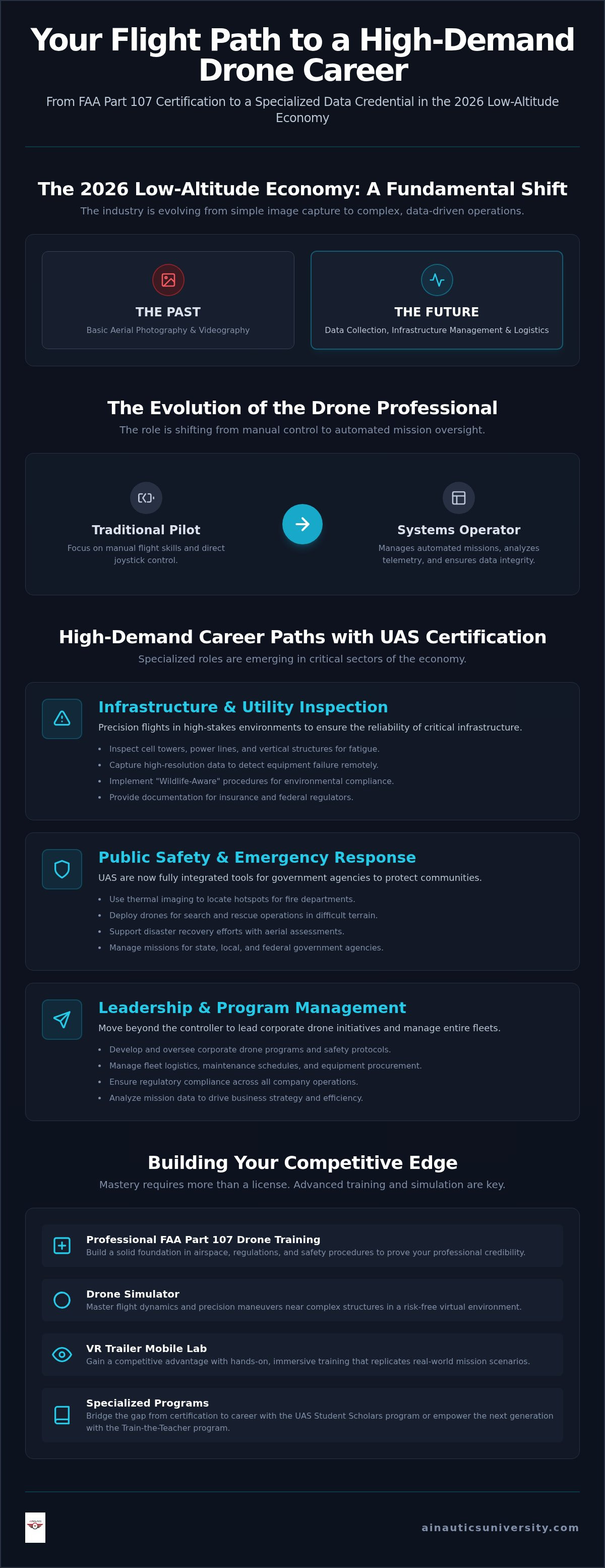
- Define the 2026 low-altitude economy and understand why the industry's shifting from simple aerial photography to complex data-driven operations.
- Explore high-demand career paths with UAS certification in sectors like public safety, vertical structure inspection, and critical infrastructure.
- Look beyond flight operations to discover leadership roles like UAS Program Management, where you'll manage corporate drone initiatives and fleet logistics.
- Gain a competitive advantage by mastering flight dynamics through the Drone Simulator and immersive training in the VR Trailer Mobile Lab.
- Learn how specialized tracks like the UAS Student Scholars program bridge the gap between initial certification and a professional career.
The 2026 Low-Altitude Economy: Why UAS Certification is Essential
The low-altitude economy refers to the commercial activity occurring in the airspace below 400 feet. By 2026, this space is transforming into a bustling corridor for data collection and logistics. We're seeing a massive shift from simple aerial photography to complex, data-driven infrastructure management. Drones now inspect power lines, monitor crop health, and deliver medical supplies. This evolution creates diverse career paths with UAS certification for those ready to master the technology.
The introduction of FAA Part 108, which focuses on Beyond Visual Line of Sight (BVLOS) operations, is the primary catalyst for this growth. It allows companies to scale their drone programs across vast distances without needing a pilot to keep the aircraft in view at all times. While Part 108 expands what's possible for long-range delivery and utility inspections, the FAA Part 107 license remains the mandatory foundation. Securing your Part 107 license is the first step toward professional credibility. It demonstrates to employers that you understand airspace classifications, weather patterns, and emergency procedures. Without this foundation, you can't legally operate in the commercial sector.
The Shift from Pilot to Systems Operator
Modern drones are increasingly autonomous. This means the traditional pilot role is evolving into that of a mission manager or systems operator. You won't just be moving joysticks; you'll be overseeing complex automated flight plans and ensuring data integrity. Mission managers must analyze real-time telemetry and adjust flight parameters on the fly. Understanding how these autonomous systems function is now more important than manual flight skills. The UAS Student Scholars program serves as a critical workforce entry point for those looking to master these advanced systems early.
Regulatory Compliance as a Professional Asset
Professionalism in the drone industry starts with a deep understanding of the law. FAA Part 107 certification provides the legal framework for every commercial job in the sky. In high-stakes industries like construction or public safety, operational safety and meticulous mission planning aren't optional. They're the traits that separate hobbyists from professionals. AINautics focuses on providing Professional FAA Part 107 Drone Training to ensure you're prepared for these responsibilities. Mastery of these regulations protects your career, your equipment, and the public. It transforms a simple license into a high-value professional asset.
High-Demand Piloting Careers: From Infrastructure to Public Safety
By 2026, the demand for certified remote pilots has moved beyond generalist roles. Major corporations and government entities now seek specialists who can operate in high-stakes environments with precision. You'll find diverse career paths with UAS certification in sectors like energy, telecommunications, and civil engineering. These roles require more than just flight skills; they demand an understanding of industry-specific data requirements and rigorous safety protocols.
Infrastructure and Utility Inspections
Inspecting cell towers and other vertical structures is a primary growth area for the low-altitude economy. Using high-resolution sensors, pilots capture detailed imagery to detect structural fatigue or equipment failure without risking human climbers. A critical, often overlooked aspect of these missions is environmental compliance. Professional pilots must implement "Wildlife-Aware" procedures to remain compliant with the Migratory Bird Treaty Act. Documenting these wildlife assessments provides a significant value-add for insurance companies and federal regulators. It proves that the mission was conducted responsibly and legally. If you're looking to build these technical skills, practicing on a Drone Simulator allows you to master precision flight near complex structures before heading into the field.
Public Safety and Emergency Response
Public safety agencies have fully integrated UAS into their daily operations. Fire departments use thermal imaging to find hotspots, while police and EMS teams deploy drones for search and rescue or disaster recovery. State and local government agencies are actively hiring Part 107 pilots to manage these missions. High-fidelity mission planning is essential here, especially during live-event coverage or post-storm assessments. Pilots who can navigate these high-pressure scenarios are in high demand. These career paths with UAS certification offer a way to serve the community while working at the cutting edge of emergency technology.
Beyond technical inspections, aerial media plays a vital role in economic development. Cities and developers use drone cinematography to tell the story of urban growth and infrastructure progress. This intersection of art and data creates a unique niche for pilots who can blend technical certification with creative vision. Whether you're documenting a new transit hub or mapping a disaster zone, your ability to provide actionable visual data is what makes you a professional in the 2026 workforce.
Beyond the Controller: Technical and Educational Paths
It's a common misconception that every drone professional spends their day in the field with a controller in hand. In reality, the 2026 low-altitude economy relies heavily on experts who manage fleets, analyze data, and train the next generation of talent. These career paths with UAS certification often offer more stability and leadership opportunities than freelance piloting alone. As companies scale their operations, they need individuals who understand the technical ecosystem from the ground up.
UAS Education and the Train-the-Teacher Model
Educators are the backbone of the industry's growth. The role of a UAS Teacher Scholar is becoming essential in K-12 and higher education settings. These professionals aren't just teaching flight; they're showing students how drones solve real-world problems in science and engineering. By integrating a Drone Curriculum for Educators, teachers can transform traditional STEM programs into high-tech career pathways. This professional development path empowers teachers to lead school-based drone programs, ensuring their students are workforce-ready the moment they graduate.
UAS Program Management and Compliance
Corporate and municipal environments now require dedicated UAS Program Managers to oversee complex operations. This role focuses on the big picture. You'll manage a fleet of pilots through sophisticated platforms like iFlyDrone and ensure every flight meets strict operational safety standards. A manager's day involves securing FAA airspace authorizations and maintaining meticulous records for regulatory compliance. Mastery of the "Launch a Drone Program in 90 Days" framework is a highly sought-after management skill. It proves you can build a compliant, efficient drone department from scratch in a corporate or school setting.
Data integration is another high-growth area for those with UAS expertise. These specialists bridge the gap between aerial capture and Geographic Information Systems (GIS). They turn raw aerial data into detailed maps and 3D models used for asset management and urban planning. If you enjoy technical problem-solving and software integration, these career paths with UAS certification provide a way to shape the physical world through digital precision. You don't always need to be on the sticks to be a leader in this industry.
Building a Competitive Edge: Certification, Simulation, and Mastery
Standing out in the 2026 workforce requires a shift from being a "drone owner" to becoming a "certified expert." While many career paths with UAS certification are available, the most lucrative roles go to those who demonstrate mastery over simple flight. This progression starts with a legal foundation and moves through immersive practice into specialized niche expertise. Following a structured roadmap ensures you're ready for the complexities of the low-altitude economy.
- Step 1: Secure your FAA Part 107 certification through a structured training program rather than just cramming for a test.
- Step 2: Master flight dynamics using high-fidelity drone simulators to build muscle memory before conducting real-world missions.
- Step 3: Gain hands-on experience through immersive technology like VR mobile labs to simulate high-pressure environments.
- Step 4: Specialize in a niche such as 3D mapping, thermal inspection, or UAS education to increase your market value.
- Step 5: Join professional organizations like AUVSI to network with industry leaders and stay updated on regulatory changes.
The Power of Simulation and VR in Training
The AINautics Drone Simulator prepares pilots for scenario-based emergencies that are too dangerous to practice with live equipment. This high-fidelity environment allows you to fail safely while refining your reaction times. Using Immersive Drone Training Technology is essential for building the muscle memory required for precision work near critical infrastructure. Our VR Trailer Mobile Lab takes this a step further by bringing hands-on learning directly to schools and job sites, ensuring students can train in diverse, realistic environments regardless of their location.
Self-Paced vs. Instructor-Led Certification
Choosing the right learning model depends on your specific career goals and schedule. Self-Paced Certification options offer the flexibility to study around a full-time job or school. However, instructor-led programs provide direct access to expert mentors who can explain the nuances of airspace management. The goal is to seek workforce-ready training that prioritizes operational safety over simple "test prep." If you're just starting your journey, our Drone Training for Beginners guide provides a clear path to mastery. You'll move from basic concepts to advanced flight operations with a supportive, expert voice guiding you every step of the way.
Ultimately, your competitive edge comes from a commitment to continuous learning. As technology evolves, your skills must evolve with it. You can begin building your professional foundation today by exploring the specialized courses at AINautics University.
Launching Your Career with AINautics University
AINautics University isn't just a training provider; it's a bridge to the workforce. Our "Learn → Train → Certify → Fly → Work" pipeline is designed to move you from initial curiosity to professional employment. The most successful career paths with UAS certification are those built on a foundation of continuous improvement and industry-standard training. As a Service-Disabled Veteran-Owned Small Business (SDVOSB), we bring a disciplined, mission-focused approach to every course we offer. This ensures that your training meets the highest standards of the 2026 low-altitude economy.
For high school students, the UAS Student Scholars program provides a direct route to advanced skills and industry recognition. It eliminates the uncertainty often found in traditional education by aligning learning with actual job requirements. Once certified, you can leverage the iFlyDrone marketplace to find on-demand pilot opportunities. This platform connects skilled operators with organizations that need immediate aerial data, providing a practical way to build your resume and earn while you continue to specialize.
Workforce Development and Program Sustainment
We prioritize program sustainment to ensure your skills don't become obsolete. This involves providing ongoing curriculum updates that reflect the latest FAA regulations and technological shifts. Professional career paths with UAS certification require more than a one-time test; they demand a commitment to mission planning and execution support. Our training aligns with state and district standards, making it a reliable choice for educators who want to build sustainable drone programs in their schools. By focusing on these standards, we help you transition from a student to a leader in the classroom or the field.
Getting Started: Your 90-Day Roadmap
Moving from zero experience to operational flight is achievable through a structured 90-day plan. You'll spend the first month mastering Part 107 Training and the legal framework of the sky. The second month focuses on hands-on mastery using our Drone Simulator and VR Trailer Mobile Lab. By the third month, you'll be ready for final certification and your first professional mission. This roadmap provides a clear, actionable path for students, parents, and educators alike. We invite you to explore the AINautics University Self-Paced Certification options to start your journey today. The 2026 economy is waiting for your expertise.
Mastering the Future of the Low-Altitude Economy
The transition from simple aerial photography to a complex, data-driven infrastructure is no longer a prediction; it's a reality. By 2026, the industry demands mission managers and data specialists who can navigate the sky with technical precision. Choosing the right career paths with UAS certification requires a strategic blend of regulatory knowledge, immersive simulation, and specialized expertise. You've seen how roles in public safety, infrastructure, and education are expanding for those who look beyond basic piloting to become true systems operators.
AINautics University stands as your bridge to this workforce. As a Service-Disabled Veteran-Owned Small Business and a proud AUVSI member, we bring a disciplined, mission-focused approach to professional development. We specialize in reducing the timeline for a school or corporate program launch to just 90 days, ensuring you're ready to meet the needs of the modern market. Whether you're a student entering the field or an educator leading a classroom, the tools for your success are ready. Take the first step toward a secure and high-impact professional future.
Start Your UAS Career Journey at AINautics University Today. The sky is no longer the limit; it's your new office.
Frequently Asked Questions
What is the average salary for a Part 107 certified pilot in 2026?
Compensation for drone professionals varies based on specialization and industry demand. While entry-level aerial photography roles exist, specialized data-driven positions in infrastructure or public safety typically offer higher compensation potential. By 2026, the value of your certificate is tied to your ability to manage complex missions and analyze technical data. Mastering these skills through a structured pipeline ensures you're positioned for the most competitive roles in the low-altitude economy.
Can I get a drone job without a Part 107 certificate?
No, you cannot legally perform commercial drone work in the United States without an FAA Part 107 certificate. This license is the mandatory legal foundation for all professional career paths with UAS certification. Whether you're working in real estate or emergency response, federal law requires this credential to ensure you understand airspace safety and regulations. Attempting to work without it can lead to significant fines for both the pilot and the hiring organization.
How long does it take to complete a UAS certification program?
The timeline depends on your chosen learning model, but AINautics University offers a structured 90-day roadmap to move from zero experience to operational flight. Our Self-Paced Certification options allow you to study at your own speed, while our school-based programs are designed for rapid implementation. This approach ensures you don't just pass a test but gain the workforce-ready skills needed to handle real-world commercial missions immediately upon graduation.
What are the best industries for entry-level drone pilots?
Real estate, construction progress monitoring, and insurance inspections are excellent entry points for new pilots. These industries allow you to build a portfolio while mastering basic data capture. For those looking for more specialized paths, public safety and utility inspections offer long-term growth. Utilizing tools like the VR Trailer Mobile Lab and Drone Simulator during your training can help you gain the edge needed to secure these roles more quickly.
Do schools hire drone instructors without a traditional teaching degree?
Many schools seek subject matter experts to lead their technical programs, though requirements vary by district. Our Train-the-Teacher Program is specifically designed to help current educators or industry professionals integrate drone technology into K-12 STEM curricula. By becoming a UAS Teacher Scholar, you gain the credentials to lead school-based programs. This model aligns your technical expertise with educational standards, making you a valuable asset to any school district looking to launch a drone pathway.
What is the difference between a drone pilot and a UAS technician?
A drone pilot is primarily responsible for mission planning, flight operations, and data collection. In contrast, a UAS technician focuses on the maintenance, repair, and integration of the aircraft's hardware and software systems. While a pilot needs to understand flight dynamics, a technician ensures the fleet remains airworthy and compliant with technical standards. Both roles are essential for a successful enterprise drone program, and many professionals choose to master both skill sets.
Is a drone simulator necessary for getting a job?
While not a legal requirement, using a drone simulator is essential for building the muscle memory and reaction time needed for professional work. AINautics University emphasizes simulation to prepare pilots for scenario-based emergencies that are too risky for live flight. Employers often prioritize candidates who have trained on high-fidelity simulators because it proves they can handle complex flight environments safely. It's a critical tool for moving from hobbyist to professional systems operator.
What is FAA Part 108 and how does it affect my career?
FAA Part 108 is the upcoming regulatory framework for Beyond Visual Line of Sight (BVLOS) operations. It will significantly expand career paths with UAS certification by allowing pilots to fly long-range missions without keeping the aircraft in view. This change is critical for industries like long-distance delivery and large-scale utility inspections. Staying informed on these rules through AINautics helps you position yourself as a forward-looking leader ready for the next phase of drone technology.

Article by
AINautics University Team
The team behind AINautics University, dedicated to drone education and FAA Part 107 certification prep, VR flight simulation, and STEM training programs for students and educators.


