
By 2026, a drone program lacking a rigorous safety culture is no longer just a liability; it's a non-starter for any professional career in the skies. You likely feel the weight of evolving FAA regulations and the pressure to meet uas safety standards while avoiding operational accidents. It's a challenge to align these high-stakes technical requirements with state educational goals while keeping students engaged. We understand that the path to compliance often feels like a moving target.
This guide empowers you to master the critical regulatory frameworks required to lead a premier drone program. You'll gain a clear roadmap for safe flight operations that ensures full compliance with FAA Part 107 and wildlife protection laws. We'll explore how immersive tools like the VR Trailer Mobile Lab and our Drone Simulator build elite skills. From the Train-the-Teacher Program to achieving UAS Student Scholars status, you'll discover how to transform technical confusion into operational excellence and professional certification.
Key Takeaways
- Learn how to transition from hobbyist flying to a professional, safety-first mindset by mastering the latest uas safety standards for 2026.
- Understand the critical role of Part 107 certification and Remote ID in maintaining legal compliance and operational transparency.
- Discover how to implement Standard Operating Procedures (SOPs) that protect your equipment, your team, and local wildlife.
- Explore how immersive tools like the VR Trailer Mobile Lab and Drone Simulator provide a risk-free environment for mastering complex flight maneuvers.
- Gain a clear framework for launching a certified drone program in just 90 days, aligning student success with industry-recognized excellence.
Understanding UAS Safety Standards in 2026
In 2026, the definition of uas safety standards has evolved into a comprehensive ecosystem of regulatory compliance, proactive risk mitigation, and strict operational protocols. The industry has moved decisively away from casual hobbyist flying toward a professional, safety-first model. For school districts and enterprises, these standards provide essential liability protection. They ensure that every flight lab or commercial mission is conducted with the same level of discipline found in traditional aviation. Mastering these protocols is the primary driver behind the future of drone careers. Employers don't just look for pilots; they look for safety managers who can protect high-value assets and public trust.
The Core Components of Drone Safety
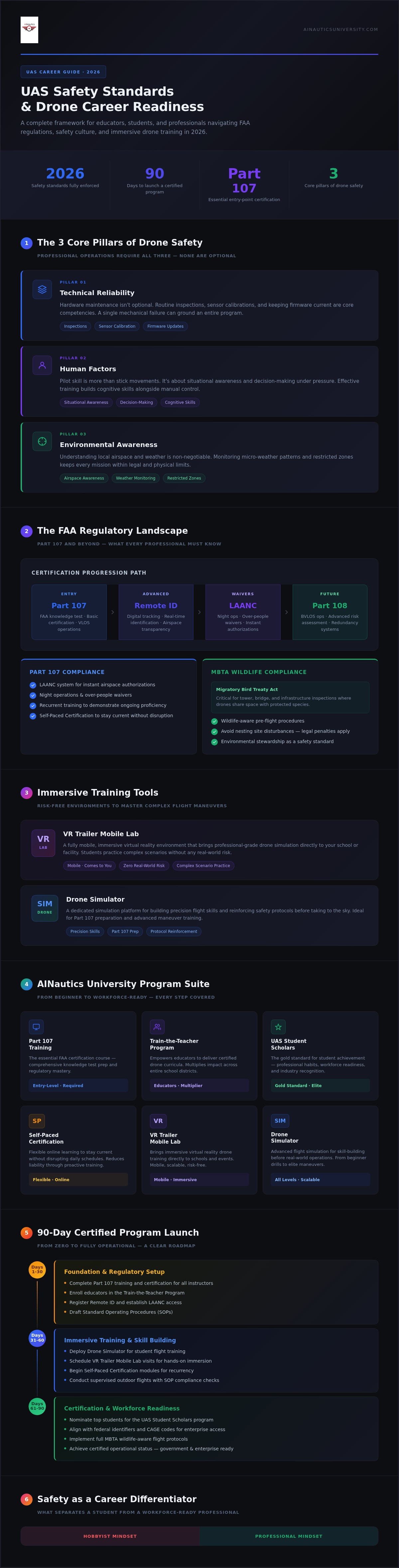
A professional operation relies on three pillars that work in harmony. You can't have one without the others if you want to maintain a certified status. These components ensure that your program remains resilient regardless of the mission's complexity.
- Technical Reliability: Hardware maintenance isn't optional. This involves routine inspections, sensor calibrations, and keeping firmware current. A single mechanical failure can ground an entire program, so we treat maintenance as a core competency.
- Human Factors: Pilot skill is more than just stick movements. It's about situational awareness and decision-making under pressure. Effective drone training for beginners focuses on building these cognitive skills alongside manual control.
- Environmental Awareness: Understanding local airspace and weather is non-negotiable. Monitoring micro-weather patterns and restricted zones keeps the mission within legal and physical limits.
Safety as a Career Differentiator
Industry leaders prioritize safety-certified pilots because they represent lower insurance risks and higher operational reliability. When you implement uas safety standards, you're building a resume that speaks to workforce readiness. The UAS Student Scholar program sets this gold standard, helping students establish professional habits early in their journey. By transitioning from basic flight maneuvers to mission-driven commercial operations, students learn to view safety not as a hurdle, but as a competitive advantage. This mindset is what separates a student from a professional ready for high-stakes workforce placement.
The FAA Regulatory Landscape: Part 107 and Beyond
The FAA regulatory framework is the backbone of all professional operations. While hobbyists might fly for fun, professionals operate within a strict legal structure that prioritizes public safety and national security. Comprehensive Part 107 drone training serves as the essential entry point, but 2026 demands more than just a basic license. Remote ID is now fully integrated into the national airspace, acting as a digital tracking system that ensures every aircraft is identifiable in real time. This transparency is a core part of modern uas safety standards. As we look toward Part 108, the industry is preparing for Beyond Visual Line of Sight (BVLOS) operations. These advanced missions require higher levels of risk assessment, hardware redundancy, and pilot certification. Working with partners who hold federal identifiers and CAGE codes, like AINautics University, ensures your program meets the rigorous criteria required for high-level government and enterprise contracts.
FAA Part 107 Compliance Standards
Staying compliant means mastering the LAANC system for instant airspace authorizations. It also involves securing specific waivers for missions that occur at night or over people. In 2026, recurrent training isn't just about passing a test; it's about demonstrating ongoing proficiency with updated technology. Our Self-Paced Certification options help pilots stay current without disrupting their daily schedules. This proactive approach to training reduces liability and keeps your team ready for any mission. We focus on turning these legal requirements into repeatable professional habits.
Federal Wildlife Compliance: The MBTA
Professional safety goes beyond avoiding mid-air collisions. It includes environmental stewardship and adherence to the Migratory Bird Treaty Act (MBTA). This is a critical federal safety standard, particularly for tower, bridge, and infrastructure inspections where drones often share space with protected species. Disturbing a nesting site can lead to significant legal penalties and project delays. We teach pilots to implement wildlife-aware procedures that protect local ecosystems while completing the mission. Documenting these steps creates a clean paper trail for federal regulators and insurers. It proves that your program operates with the highest ethical and safety standards. This level of detail is what makes our UAS Student Scholars stand out in the competitive workforce.
Operational Safety: Pre-Flight to Mission Completion
Operational safety transforms theoretical knowledge into professional habit. You don't just follow uas safety standards because they're required; you follow them to ensure every aircraft returns to the landing pad intact. A "Mission First, Safety Always" mindset ensures that project goals never compromise pilot or public safety. Integrating risk assessment tools into every flight mission is standard practice for elite programs. Before students ever take to the field, they use the AINautics Drone Simulator to practice emergency maneuvers. This controlled environment allows pilots to experience motor failures or signal loss without risking expensive hardware or personnel.
The Professional Pre-Flight Checklist
A flight mission begins long before the propellers spin. A professional checklist is your first line of defense against operational failure. It provides a repeatable structure that removes guesswork from the equation.
- Visual inspection: Check the airframe for stress fractures and ensure propellers are securely seated and free of nicks or cracks.
- Battery health: Verify voltage levels across all cells and check for physical swelling or heat damage that could lead to power loss in flight.
- GCS setup: Confirm your ground control station is free from signal interference and that all firmware versions are compatible between the aircraft and remote.
- Lost link: Establish a site-specific return-to-home altitude. This ensures the drone clears local obstacles if the connection drops.
Risk Mitigation in High-Stakes Environments
High-stakes missions require specialized safety protocols that go beyond basic flight maneuvers. When inspecting vertical structures like cell towers or utilities, pilots must account for electromagnetic interference and tight flight corridors. Safety also involves environmental stewardship. If you're operating near protected-bird nests, such as ospreys, you must maintain a safe standoff distance to avoid distressing the wildlife. This directly addresses the Migratory Bird Treaty Act requirements that protect local ecosystems during commercial work. For live events, managing safety perimeters and crowd buffers is essential. These uas safety standards protect the public and ensure your program remains a trusted, professional partner in the community.
Building a Safety Culture Through Immersive Training
Safety culture isn't built overnight; it's forged through consistent, high-stakes practice without the actual stakes. This is where immersive drone training technology changes the game. It allows students to fail safely while adhering to strict uas safety standards. Our VR Trailer Mobile Lab provides a high-fidelity environment where learners can master the controls before ever stepping onto a flight line. This approach bridges the gap between digital theory and physical mastery, ensuring every pilot is workforce-ready. By removing the fear of equipment damage, we allow students to focus entirely on precision and protocol.
We focus on preparing for the "what ifs." Scenario-based training in a virtual space lets pilots experience bird strikes or lost link events without risking a high-value airframe. The UAS Teacher Scholars program empowers educators to bring this expert-level safety into the classroom. It provides the tools and confidence needed to lead a professional drone program that mirrors industry expectations. When teachers lead by example, students adopt a safety-first mindset that carries into their professional lives.
The Role of Simulators in Safety
Digital environments are the perfect laboratory for risk. Our Drone Simulator allows students to toggle high-wind conditions or simulate sudden hardware failures. This builds the muscle memory required to react instinctively during real-world missions. Educators can then use digital flight logs to standardize assessments. This ensures every student meets the same high uas safety standards before they ever touch a live remote. This level of standardization is what makes our graduates highly sought after in the workforce.
Safety for Students and Educators
Integrating a drone curriculum for educators requires a deep dive into classroom logistics. You need to manage battery charging stations safely and secure storage while maintaining a designated flight zone. These are the practical details that prevent accidents in a school environment. We ensure student scholars understand professional liability and insurance expectations from day one. This positions them as reliable assets for future employers who prioritize risk management. If you're ready to build a world-class program, explore our comprehensive UAS training solutions today.
Implementing Safe UAS Programs: The 90-Day Launch Framework
Launching a professional drone program often feels like an insurmountable task for school administrators. The 90-Day Program Launch framework simplifies this transition by breaking the process into manageable, high-impact milestones. We help schools align their district standards with FAA requirements and Career and Technical Education (CTE) pathways from day one. This structured approach ensures that every flight lab adheres to the highest uas safety standards while providing students with a clear path to workforce placement. Professional development serves as the cornerstone of this sustainment. It ensures that instructors are as prepared as their students to navigate the complexities of the modern airspace.
Step-by-Step Program Rollout
The framework moves quickly from initial planning to active, safe flight. We guide you through three distinct phases designed to build a foundation of operational excellence. You don't have to guess about compliance; we provide the roadmap.
- Phase 1: Compliance and Planning. This stage focuses on a comprehensive compliance audit. We handle the airspace authorization planning and ensure your facility is ready for safe flight operations.
- Phase 2: Teacher Mastery. This phase centers on the Train-the-Teacher Program. Educators gain their certifications and integrate simulator-based curriculum into their daily lessons. It's about building confidence before students ever touch a remote.
- Phase 3: Operational Flight. This final phase brings everything together with live flight operations. Students earn their UAS Student Scholars certification, proving they can handle complex missions with professional discipline.
Ensuring Long-Term Operational Compliance
A successful program requires more than just a strong start. It needs a system for ongoing compliance and curriculum updates as regulations evolve. We provide continuous instructor support to ensure your program never falls behind new federal requirements. Maintaining a clean paper trail is vital for district insurance and federal audits. This documentation proves that your operations consistently meet uas safety standards year after year. Finally, we connect your certified graduates to the iFlyDrone marketplace. This turnkey platform allows students to apply their skills in a safety-certified environment, collecting data for real-world clients. It's the ultimate bridge between the classroom and a sustainable career. By utilizing this marketplace, schools can demonstrate the direct ROI of their UAS investment while maintaining the highest levels of safety.
Elevate Your Career with Operational Excellence
Mastering uas safety standards is the definitive step toward a sustainable career in the drone industry. You've seen how integrating rigorous FAA compliance with immersive training tools like the VR Trailer Mobile Lab creates a culture of safety that employers value. By prioritizing mission-driven protocols and environmental stewardship, you protect both your team and your professional reputation. It's about moving beyond basic flight to achieve true operational mastery that stands out in the workforce.
Success in the 2026 landscape requires more than just technical skill; it demands a commitment to aviation discipline. As an SDVOSB and AUVSI member, we bring the expertise of FAA Part 107 experts to every program we launch. Whether you're a student seeking UAS Student Scholar status or an educator ready for the 90-Day Program Launch, the path to mastery is clear. We're here to bridge the gap between your current skills and the high-tech demands of the future. Launch your safe and compliant drone program with AINautics University today. The future of flight is waiting for those who lead with safety.
Frequently Asked Questions
What are the primary FAA safety standards for commercial drone pilots?
The primary FAA safety standards include maintaining an active Part 107 license and adhering to Remote ID requirements. Pilots must also use the LAANC system for airspace authorizations and follow specific rules for night operations or flying over people. AINautics University provides Part 107 Training to ensure pilots understand these legal foundations. Maintaining a clean paper trail for every mission is essential for long-term compliance and professional liability protection.
How do UAS safety standards differ for schools and school districts?
Schools must balance FAA rules with district safety protocols and educational standards. This includes managing classroom drone labs, safe battery charging zones, and student flight perimeters. Our UAS Student Scholars program helps districts establish these professional habits early. The focus shifts from simple flight to mission-driven safety. This ensures the program meets both state educational requirements and federal aviation laws while protecting the school from liability.
Is the Migratory Bird Treaty Act (MBTA) a required safety standard for drone inspections?
Compliance with the Migratory Bird Treaty Act is a critical federal standard for professional drone operations. This is especially important for tower and bridge inspections where protected species may nest. AINautics includes wildlife-aware procedures in its training to prevent environmental disturbances. Every professional inspection should include a documented wildlife assessment. This protects the pilot from federal penalties and ensures the mission remains ethically and legally sound.
What safety equipment is mandatory for a professional drone program?
A professional program requires more than just the aircraft. Mandatory equipment includes high-visibility safety vests, fire-resistant battery storage bags, and designated landing mats. Pilots should also have access to real-time airspace monitoring tools and ground control station signal checks. We integrate these hardware requirements into our 90-Day Program Launch. Having the right gear on hand ensures that your flight operations meet the highest uas safety standards during every mission.
How does drone simulator training improve operational safety?
Simulator training allows pilots to practice high-risk maneuvers without endangering personnel or expensive hardware. The AINautics Drone Simulator provides a controlled environment to experience hardware failures or extreme weather conditions. This builds the muscle memory needed to react correctly during real-world emergencies. Using immersive tools like the VR Trailer Mobile Lab ensures that students are proficient in their controls before they ever step onto a live flight line.
What happens if a drone program fails to meet FAA safety standards?
Failing to meet uas safety standards can lead to severe consequences, including significant civil penalties and the suspension of Remote Pilot Certificates. Beyond legal fines, a non-compliant program faces increased insurance premiums and potential liability in the event of an accident. It also damages the program's reputation with federal regulators and local stakeholders. Consistent adherence to professional protocols is the only way to ensure long-term operational sustainment and safety.
Can educators teach drone safety without being Part 107 certified?
Educators can teach the theoretical aspects of drone safety, but a Part 107 certified Remote Pilot in Command must oversee any live flight operations. Our Train-the-Teacher Program is designed specifically to help educators earn their own certifications. This empowers them to lead their classrooms with authority and legal compliance. Being certified allows teachers to model professional habits and ensure that all student flight activities meet current federal safety requirements.
How often should UAS safety protocols be updated?
Safety protocols should be reviewed and updated at least once a year or whenever the FAA issues new rules. As the industry prepares for Part 108 and Beyond Visual Line of Sight operations, your SOPs must reflect these changes. AINautics provides ongoing curriculum updates and instructor support to keep programs current. Staying proactive ensures that your operations remain compliant with the latest technology and regulatory expectations without falling behind industry benchmarks.

Article by
AINautics University Team
The team behind AINautics University, dedicated to drone education and FAA Part 107 certification prep, VR flight simulation, and STEM training programs for students and educators.


